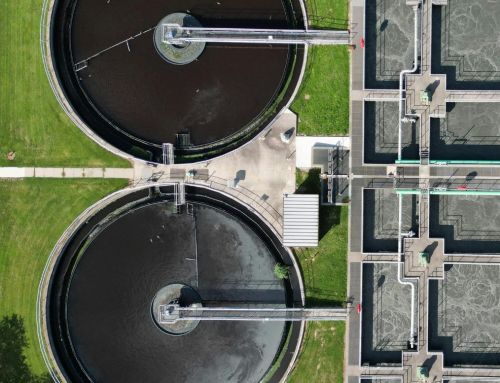
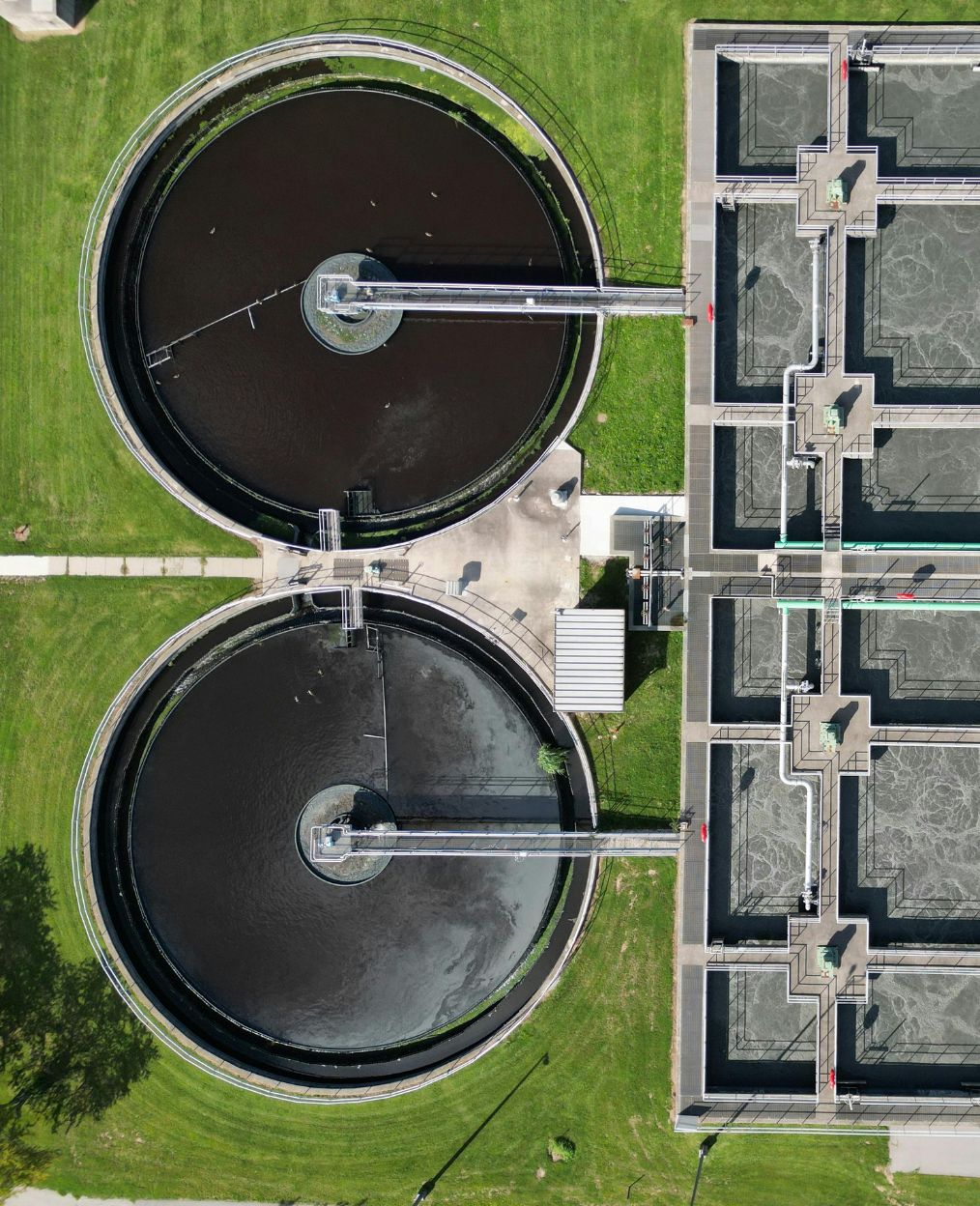
Sewage treatment plants are essential infrastructure. They protect rivers, groundwater, and public health by processing one of the most hazardous waste streams in any city or industrial zone. But they come with an unavoidable consequence that affects workers, nearby residents, and regulatory standing every single day: odour.
If you manage or operate an STP, you already know this problem intimately. The sharp, nauseating smell of rotten eggs at the inlet works. The acrid ammonia sting near the sludge dewatering unit. The persistent background malodour that clings to clothing, draws complaints from the neighbourhood, and occasionally attracts the attention of the local Pollution Control Board.
The question is not whether your STP smells. The question is whether you are managing that smell — or whether it is managing you.
This guide covers everything plant managers and EHS officers need to know about STP odour: what causes it, where it comes from, why conventional approaches fall short, and what modern molecular neutralisation technology can do that older methods cannot.
Why Do Sewage Treatment Plants Smell So Bad?
To control odour effectively, you first need to understand what you are actually dealing with. STP odour is not a single compound — it is a complex, dynamic mixture of gases produced at different stages of the treatment process, by different microbial and chemical reactions, at different concentrations throughout the day.
The Primary Culprits
Hydrogen Sulfide (H₂S)
This is the compound responsible for the characteristic rotten-egg smell that defines STP environments. H₂S is produced when sulfate-reducing bacteria break down organic matter in the absence of oxygen — a process called anaerobic decomposition. It is generated in particularly high concentrations in: inlet channels and screens, primary sedimentation tanks, gravity thickeners, anaerobic digesters, and sludge holding tanks.
H₂S is not just unpleasant — it is dangerous. At concentrations above 10 ppm, it causes eye and respiratory irritation. Above 50 ppm, it produces headaches, dizziness, and nausea. Above 100 ppm, it can cause rapid unconsciousness. Worker safety in enclosed STP spaces — manholes, pump stations, enclosed inlet works — is a serious and legally consequential concern.
Ammonia (NH₃)
Ammonia is generated during the biological breakdown of nitrogen-containing organic matter — proteins, urea, and amino acids. It is present throughout the treatment process but peaks in concentration at the biological treatment stage, in the return activated sludge stream, and particularly in the sludge treatment and dewatering sections. Ammonia produces the sharp, acrid, eye-watering smell that is distinct from H₂S and tends to dominate in the latter stages of treatment.
Volatile Organic Compounds (VOCs)
Beyond H₂S and ammonia, STP environments generate a broad range of VOCs — including mercaptans (methyl and ethyl mercaptan), indole, skatole, butyric acid, and various aldehydes. These compounds are produced in smaller quantities than H₂S or ammonia but are detectable at extremely low concentrations — some in the parts-per-billion range — making them significant contributors to perceived odour intensity even when analytical measurements might suggest otherwise.
Mercaptans
Methyl mercaptan, in particular, deserves special mention. It has an odour detection threshold of approximately 0.0021 ppm — meaning humans can smell it at concentrations almost a thousand times lower than H₂S. It is produced alongside H₂S in anaerobic zones and is commonly present in STP inlet and primary treatment areas.
Where Does STP Odour Come From? The Source Map
Odour does not emerge uniformly from an STP. It concentrates at specific process points, and effective odour management requires targeting these source zones precisely. Here are the primary odour emission hotspots in a typical STP:
Inlet Works and Screens
Raw sewage arriving at the plant carries dissolved H₂S, mercaptans, and VOCs that volatilise immediately upon disturbance — particularly at screen raking equipment, grit removal channels, and any points where the wastewater surface is agitated. This is typically the highest-intensity odour zone in the entire plant.
Primary Sedimentation Tanks
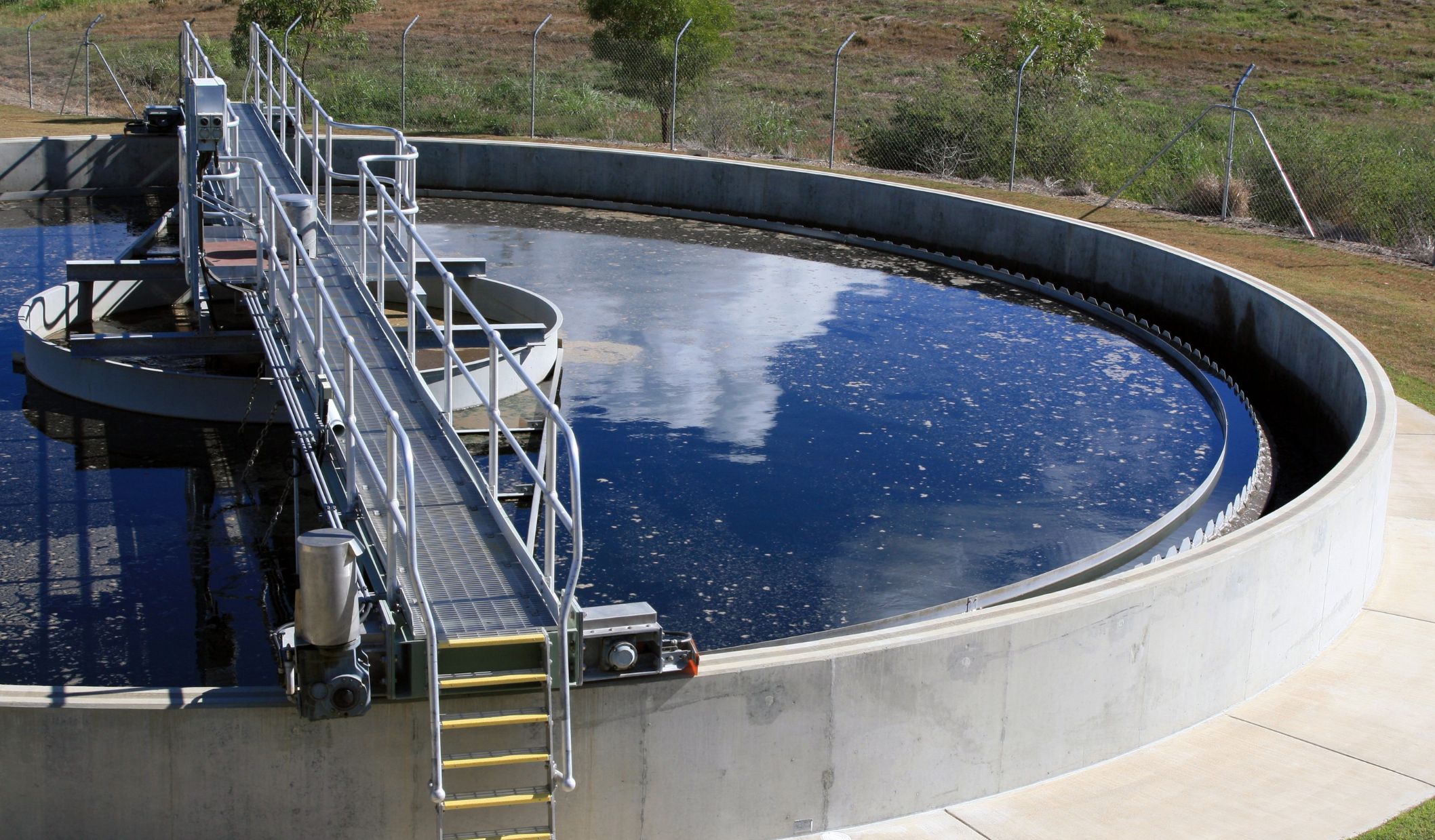
The slow-moving, quiescent surface of primary clarifiers provides ideal conditions for anaerobic activity in the settled sludge layer. H₂S and other reduced sulfur compounds off-gas continuously from the tank surface, particularly in warm weather when microbial activity accelerates.
Biological Treatment Zones (Aeration Tanks)
Counterintuitively, the aeration stage can be a significant odour source, particularly during startup, upsets, or when the influent load spikes. The stripping action of aeration transfers dissolved volatile compounds from the liquid phase to the air, creating localised odour plumes.
Sludge Thickening and Dewatering
This is often the most intensely odorous area in an STP. Concentrated sludge undergoing mechanical dewatering — in centrifuges, belt filter presses, or screw presses — releases enormous quantities of H₂S, ammonia, and VOCs as the material is compressed and agitated. The filtrate and centrate streams are particularly pungent.
Anaerobic Digesters
Where present, anaerobic digesters produce biogas containing methane and H₂S. Leaks around hatches, inspection ports, and pipe connections are common H₂S emission points. The digestate itself, when handling or transfer occurs, is a major odour source.
Sludge Drying Beds and Holding Areas
Open sludge drying beds are among the most difficult odour sources to manage. The large exposed surface area, combined with ongoing anaerobic decomposition in the drying sludge, produces continuous H₂S and ammonia emissions that can travel considerable distances downwind.
Lifting Stations and Pump Sumps
These enclosed, poorly ventilated spaces accumulate H₂S from the sewage they handle, creating both odour and serious safety hazards for maintenance personnel.
The Regulatory Context in India
STP odour is not just an operational nuisance — it is a compliance matter. India’s environmental framework imposes specific obligations on STP operators:
The Environment (Protection) Rules, 1986 under Schedule II and Schedule VI require that all practicable efforts be made to remove unpleasant odour from industrial and municipal effluent discharges.
The Central Pollution Control Board (CPCB) has issued guidelines on odour pollution and its control, recognising malodour as a form of air pollution that can trigger health effects including respiratory irritation, headaches, nausea, and chronic stress in exposed populations.
State Pollution Control Boards increasingly issue notices and closure orders to facilities — including STPs — that generate sustained odour complaints from nearby residential areas. In cities where STPs are located close to populated zones, this is a growing source of legal and regulatory risk for municipal bodies and private operators alike.
Beyond regulatory compliance, there is a practical business and reputational dimension: public complaints about STP odour can escalate quickly in the era of social media and resident welfare associations, making proactive odour management a matter of institutional reputation as well as legal compliance.
Conventional Odour Control Methods: What Works, What Doesn’t
Before evaluating modern solutions, it is worth honestly assessing the approaches most commonly used in Indian STPs today — and their limitations.
Chemical Scrubbers
Wet chemical scrubbers pass odorous air through a liquid medium — typically caustic soda (NaOH) for acidic gases like H₂S, or sulfuric acid for alkaline gases like ammonia — where the target compounds are absorbed and neutralised. Scrubbers can be effective when properly designed and maintained, but they have significant drawbacks: high capital cost, substantial energy consumption for fans and pumps, regular chemical replenishment costs, and the generation of spent scrubber liquor that must be disposed of. They are also single-compound-targeted — a scrubber designed for H₂S will not address ammonia, and vice versa.
Biofilters
Biological filters pass odorous air through a bed of organic media — wood chips, compost, or synthetic structured packing — colonised by microorganisms that metabolise odour-causing compounds. Biofilters work well for steady, moderate odour loads with consistent composition, but they are slow to respond to load spikes, require significant footprint, need regular media replacement, and can themselves become odour sources if poorly maintained. Installation timelines run to several weeks, and capital costs are substantial.
Ozone Injection
Ozone is a powerful oxidant that can break down many odour-causing compounds. However, ozone itself is a toxic gas — the occupational exposure limit is just 0.1 ppm — making it inherently hazardous to use in environments where worker exposure is possible. Ozone generators are energy-intensive, require careful engineering controls, and can produce secondary oxidation by-products. They are best suited to enclosed, tightly controlled environments rather than the open or semi-open conditions typical of most STP process areas.
Masking Agents and Perfumed Foggers
The most commonly deployed “solution” at Indian STPs remains the simplest and least effective: fogging machines loaded with perfumed masking agents that create a competing olfactory stimulus. These do not neutralise odour — they add another smell on top of the existing one. The H₂S, ammonia, and VOCs remain present at the same concentrations. The masking effect is temporary and breaks down rapidly in warm, humid, or windy conditions. Prolonged use often results in a peculiar hybrid odour that communities find equally unpleasant. Workers exposed to both the original odour compounds and the masking fragrance chemicals may experience additional respiratory irritation.
The Modern Approach: Molecular Odour Neutralisation
The limitations of conventional approaches have driven demand for a fundamentally different technology — one that does not require large infrastructure, does not produce secondary pollutants, and addresses the chemistry of odour at its source rather than layering interventions on top of it.
Molecular odour neutralisation works by deploying chemically active compounds that react directly with odour-causing molecules — H₂S, ammonia, mercaptans, amines, and VOCs — and convert them into odourless, chemically stable products through ionic exchange, redox reactions, and adsorptive binding. The odour compounds are not masked, diluted, or temporarily suppressed. They are chemically converted into something that no longer smells.
This is the science behind KleanAir by Fintovate Technologies — a plant-based molecular odour neutralisation product engineered specifically for the complex, mixed odour environments of industrial and municipal wastewater treatment.
How KleanAir Works in STP Environments
KleanAir is available in two formulations, both of which are relevant to STP applications:
KleanAir HS 400 targets acidic odour compounds — H₂S, methyl mercaptan, and VOCs — using a mildly alkaline buffer system with redox-active functional groups. When HS 400 contacts H₂S, a redox reaction occurs in which the sulfide is oxidised to an odourless sulfate or elemental sulfur. The reaction is irreversible — the H₂S molecule no longer exists in a form that can off-gas or re-emit.
KleanAir MA⁺ targets alkaline odour compounds — ammonia and amines — using mildly acidic organic salts that protonate the basic gas molecules, converting them into stable, non-volatile ammonium salts. Again, the reaction is permanent: the ammonia is chemically bound, not suppressed.
Both variants are composed of biodegradable inner salts, essential oils, and plant-based extracts — making them safe for use around biological treatment systems without disrupting the microbial ecosystems that the STP depends on to function.
Application in an STP
KleanAir can be deployed across the STP’s odour hotspots using methods that require no new infrastructure:
At the inlet works: HS 400 delivered via misting system intercepts H₂S and mercaptans as they volatilise from the incoming sewage surface, neutralising them before they disperse into the surrounding air.
At sludge dewatering: Drip dosing of HS 400 into the sludge feed stream prior to the dewatering press neutralises H₂S and VOCs before the compression and agitation process releases them at high concentrations.
At drying beds: Periodic misting of MA⁺ over open sludge drying bed surfaces neutralises the ammonia plume generated by ongoing decomposition, reducing both the immediate olfactory impact and the downwind odour footprint.
At lifting stations and pump sumps: Drip dosing of HS 400 into the wet well neutralises dissolved H₂S before it can volatilise into the confined space above — reducing both odour and the critical safety hazard that H₂S accumulation represents for maintenance workers.
At the site perimeter: Automated misting systems delivering either HS 400 or MA⁺ (depending on the dominant odour at a given time) at the site boundary create an active neutralisation barrier, intercepting odour compounds before they reach neighbouring properties.
Practical Results: What to Expect
Plants that have deployed KleanAir’s molecular neutralisation approach in STP environments have reported:
- Odour intensity reductions of up to 90% within hours of initial deployment
- Significant reduction in worker complaints about headaches, nausea, and eye irritation
- Measurable improvement in ambient air quality at site boundaries
- Reduction in formal complaints from neighbouring communities
- Compliance with ambient air quality standards set by State Pollution Control Boards
Importantly, these results have been achieved without capital expenditure on new infrastructure, without generating secondary pollutants or chemical waste streams, and without disrupting the biological treatment processes that the STP depends upon.
A Practical Odour Control Plan for STP Managers
Based on the source mapping and solution framework above, here is a practical approach to implementing effective odour control at your STP:
Step 1 — Identify Your Dominant Odour Sources
Walk your plant and identify the two or three locations generating the most intense odour. In most STPs, these will be the inlet works, the sludge dewatering area, and any open sludge storage. Prioritise these for immediate intervention.
Step 2 — Characterise Your Odour Profile
Determine whether your dominant odour is primarily acidic (H₂S, mercaptans — rotten egg / sulfurous character) or alkaline (ammonia, amines — sharp, acrid, eye-watering character) or both. This determines whether you need HS 400, MA⁺, or a combination deployed at different points.
Step 3 — Match the Delivery Method to the Application
Misting systems work well for open or semi-open areas — inlet works, drying beds, perimeter barriers. Drip dosing is ideal for enclosed or submerged sources — wet wells, sludge feed lines. Manual spraying provides flexibility for sporadic or maintenance-triggered odour events.
Step 4 — Start With a Pilot Zone
Rather than treating the entire plant simultaneously, pilot the approach at your highest-impact odour source. Measure the before and after difference — either through quantitative air sampling or structured olfactory assessment — and document the result. This builds internal confidence and provides data for regulatory reporting.
Step 5 — Scale Across the Plant
Once the pilot demonstrates results, extend the program systematically to other odour hotspots. A full-plant odour control program using KleanAir typically requires modest ongoing product consumption relative to the plant’s operational budget, with no capital expenditure and no infrastructure modification.
STP odour is one of the most persistent, complex, and consequential environmental management challenges facing plant operators and municipal bodies in India. It threatens worker health, community relations, and regulatory standing simultaneously — and conventional approaches address it inadequately, expensively, or hazardously.
Molecular odour neutralisation — specifically KleanAir’s dual-formulation, plant-based approach — offers something genuinely different: a chemistry-driven, infrastructure-light solution that eliminates odour at the source rather than covering it up, and that is safe, scalable, and cost-effective enough for both large municipal STPs and smaller industrial treatment facilities.
If odour at your STP is an unsolved problem, the solution may be simpler — and more accessible — than you think.
To arrange a site assessment or product trial at your STP, contact Fintovate Technologies:
Bengaluru, India | +91-89 7001 4001 | sales@fintovate.com | www.fintovate.com